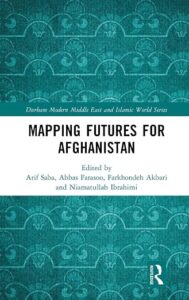
‘Mapping Futures for Afghanistan’ is a brave attempt by Afghan scholars residing outside Afghanistan to map possible paths to a better future amid the complex security, political and human rights situation in their nation. Grounded in ‘local perspectives’, the book claims to challenge dominant narratives of ‘despair’ …[and] a lack of political imagination for a democratic, stable, and representative future’.
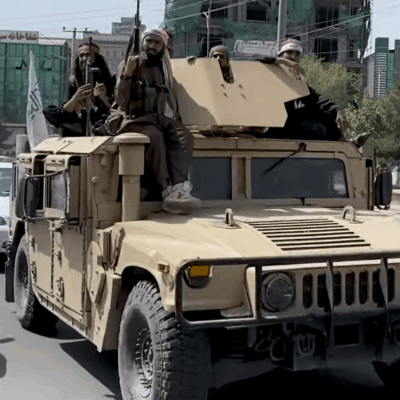
Afghanistan is politically unstable, economically fragile and internationally isolated under the current leadership of the Taliban. The Islamist group regained power in August 2021, amid the dramatic collapse of the internationally recognised Afghan government, the fleeing of President Ashraf Ghani to the United Arab Emirates, and the chaotic withdrawal of US troops as Taliban militants entered Kabul. The US-backed Afghan government had been ruling the nation since US-led NATO forces overthrew the Taliban in the early 2000s.
The book attempts to imagine a stable future for Afghanistan in a context of historical and ongoing problems. It has 15 chapters in three parts—Politics and Economics; Human Rights and Security; and International Relations. It covers issues including the state of democracy, domestic politics and regime transitions, the US-led war on terror, the controversial peace negotiations between the US and Taliban without any involvement of the Afghan republic, the human rights situation especially in relation to women and girls, and Afghanistan’s global positioning in the context of evolving regional political and security dynamics. It is helpful to see contributions from women scholars in the book given that the literature on Afghanistan has primarily been written by men, an issue this book acknowledges.
Much of the analysis of Afghanistan’s complex and volatile past acknowledges that this history makes it difficult to imagine a democratic future. Niamatullah Ibrahimi’s historical account of regime transitions in Afghanistan suggests political fragility has been a feature for the past 100 years. He notes, ‘Contentious politics triggered the collapse of many governments in Kabul, which were often poor in both capacity and democracy.’ In particular, the politics of exclusion has been central to its governance woes. Despite a multi-ethnic population, Pashtuns have dominated power structures for most of the past 100 years and in the current Taliban regime 90 percent of key leadership positions have been held by Pashtuns. As Abbas Farasoo notes, ‘Marginalization and exclusion have been the rule in Afghanistan’s history, rather than exceptional events.’ It is not surprising, then, to read in Farkhondeh Akbari’s chapter that nearly all regime changes in Afghanistan happened through ‘assassinations, coups, forced exiles, civil wars, and international interventions’.
The book attempts to counter the prevalent ‘colonial knowledge frameworks’ that continues to influence perceptions of Afghanistan, as an important reminder that any country’s democratic future should be determined by local communities rather than outsiders. Colonial narratives first emerged around 19th century, initially through memoirs written by ‘officials, diplomats, and travellers from British India’. Afghan intellectuals and state officials in the 20th century continued to promote ‘ethno-centric’ and ‘European ideas’ to forge a collective identity of a ‘cohesive Afghan state’ without acknowledging the pluralistic nature of Afghan society. Later, according to the editors, the same ‘colonial stereotypes and cliches, and cultural generalisations were invoked’ to justify the US-led intervention in 2001 and the US’ decision to pull out from Afghanistan in 2010. Thus, the book gently reminds readers to be wary of literature on Afghanistan written by outsiders as their solutions to Afghanistan’s problems are likely to miss the local nuance that this book captures.
It is useful to read the critical analysis of the missteps of the US-backed Afghan republic (2004-2021). For instance, Akbari argues the Afghan republic was a ‘fragile experiment in democracy’ that was undermined by ‘corruption, centralization, and factionalism’. She argues that sustainable peace requires a ‘comprehensive representation’ of all actors to the conflict during peace negotiations. Farazoo notes that Afghan republic ‘failed to dismantle entrenched hierarchies, leaving a fragile state vulnerable to exclusionary politics and eventual collapse’. Saifullah Taye tracks the massive inflow of international aid during the period of the Afghan Republic, noting how its disbursement was driven primarily by the security objectives of the donor governments rather than local communities’ needs, and calls for community-driven disbursement in the future. Timor Sharan notes with concern the governance inefficiencies due to ‘over-centralisation’ including during the tenure of the Afghan republic and calls for further decentralisation going forward.
Despite complications owing to international actors’ involvement in Afghanistan, the book suggests that the international community’s engagement with Afghanistan remains crucial for its economic survival and democratic future. Foreign aid is crucial. Nematullah Bizhan states that Afghanistan needs an additional USD 4-6 billion of foreign assistance per year for the next five years. However, it’s unclear where the much-needed money would come from, particularly with wars in Iran, Gaza and Ukraine and the freezing of billions of dollars of Afghan assets by US and European authorities. Huma Saeed, Farasoo and others urge the international community to continue engaging with Afghan civil society, media and the Afghan diaspora to document the situation on the ground and uplift democratic voices. Additionally, Arif Saba and Nazifa Haqpal call for the international community to hold the Taliban accountable for human rights abuses, such as pursuing investigations through the International Criminal Court.
The contemporary situation facing Afghanistan is sobering. But this book attempts to keep alive hope of a more stable future rooted in political inclusivity, accountability and respect for human rights.
Main image: Two children in Afghanistan playing with a kite. Photo by Farid Ershad on Unsplash. Book cover image used with permission from publisher.